|
|
|
|
|
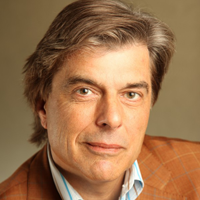
June 3, 2009After a quarter-century of increasing free trade and globalization, we have seen our prosperity suddenly stagger -- even in China, where mere six per cent growth is effectively a recession. While GM goes bankrupt, investors still dream of a return to "normal": the happy years before 2008.
Jeff Rubin, chief economist at CIBC World Markets for almost 20 years, makes it clear that those years were decidedly abnormal, a three-decade holiday from reality.
Globalization wasn't the result of wise economic theories brilliantly applied. And the recession didn't happen because American deadbeats took out mortgages they couldn't afford. Globalization thrived on cheap oil. When the price of oil went up, recession followed.
Without resorting to arcane formulas or jargon, Rubin shows how cheap oil permitted an Atlantic salmon, caught off Norway, to travel around the world to China for processing, then back to Europe or North America to be sold at a profit. He also traces the history of earlier oil-fuelled booms and busts, and makes a good case that "peak oil" is real.
Still a controversial theory, peak oil predicts that world oil supplies behave like any individual oil well: a surge of quick, easy oil, followed by declining production as pressure falls off. Eventually, extracting the rest takes more effort than the oil itself is worth. That's why we now dig out the tar sands and plan oil rigs in the Arctic Sea, because the easy oil is all gone.
The energy efficiency paradox
Earlier price hikes, like that in 1973, promoted more compact cars and more efficient engines. Rubin shows how fuel efficiency led directly to still more oil consumption: By spending less on gas for our cars, we have more money to buy other consumer goods. And those goods need gas and oil to be produced, packaged, and shipped.
Cheap oil has produced a very agreeable life for many of us here, but overseas it's created social change on a gigantic scale. Hundreds of millions of Chinese have risen from poverty to prosperity in 20 years.
South Korea, lacking oil, buys it by making computer chips (to make a standard 2-gram 32 MB DRAM chip requires 1.6 kilos of fossil fuel and 32 kilos of water). The chips also pay for over 150,000 South Koreans to study in the U.S. at any given time, and over 6,000 persons a day fly from the U.S. into Seoul International Airport -- 2,190,000 a year.
No more winter strawberries
This, says Rubin, is about to end. Yes, the latest recession pulled down the price of oil, but it's only relatively cheap. The price will go up again. It wasn't a fluke when oil hit $147 a barrel last year, and we will see higher prices still. The higher they go, the less we'll be able to afford strawberries in winter and Tuscany in summer.
We won't even be able to afford most of the imported food in the supermarkets, Rubin argues. So we'll tear out our suburban patios and grow our own vegetables, or buy locally grown food. It'll be expensive too, and only seasonal, but that will be part of a smaller world.
Meanwhile, the companies that went offshore in search of cheap labour will be coming home again to beat the high cost of shipping. What's more, Rubin foresees a kind of "carbon tariff" that will make overseas goods even more expensive. If the Chinese want to keep selling us stuff, he says, they'll have to stop burning coal and pumping CO2 into the atmosphere. A tariff will remove the competitive edge they get from their emissions.
Rubin talks to The Tyee
In a phone interview with The Tyee, Rubin saw benefits even for the Chinese in a small-world economy. "Their world gets smaller too," he said. "They're even better suited for a small world, because their domestic market is huge. They're leading the current recovery with industrial production for their own people." He noted that China's automotive market is already larger than that of the U.S.
If gasoline gets really costly, does that foretell the depopulation of rural Canada? Rubin didn't think so. "China won't be sending us $6 billion in food," he said, "so we'll have to grow our own." And while we'll spend more on food, jobs will keep coming home.
Rubin saw big problems ahead, especially for the air travel industry. "It will face an upheaval greater than automotive restructuring."
GM: 'An investment in obsolescence'
Speaking of cars, he didn't think much of the GM bailout by the U.S. and Canada: "An investment in obsolescence. We should be investing in the future, not the past, making a huge capital investment to build buses and public transit."
On balance, Rubin saw a "reasonable prospect" in a post-global small world. "Our economy will be more diversified and self-sufficient," he said, and the high cost of oil will be "better than a hundred Kyotos" in controlling greenhouse gas emissions.
Jeff Rubin's book doesn’t deal with all the implications of high-cost oil. Without air conditioning, where will Phoenix and Las Vegas go? And who will occupy Vancouver's hotels if international tourism implodes?
Your whole lot smaller world will be a protectionist world, and one with far less disposable income. It may have some bad, 1981-style inflation as governments try to pay off their deficits, and screw their creditors, with cheaper dollars.
Still, Rubin's radical vision of a small-world future is far more attractive than the vision we now have, in hindsight, of our last few squandered decades.


Rubin's vision of a future smaller world is more attractive... but thus is framed the debate between Malthusians and Cornucopians.
Paul Ehrlich, commenting on his current thoughts regarding The Population Bomb said:
"Some things I have predicted have not come to pass. For instance, starvation has been less extensive than I (or rather the agriculturists I consulted) expected. But it’s still horrific, with some 600 million people very hungry and billions under- or malnourished."
The U.N. estimate for that number is 874 million people right now… In our own Canadian cities large and small, thousands are homeless (exact figures being hard to come by) and hundreds of thousands use food banks. What will rising oil prices, rising food prices as a consequence, and even more food crops diverted to biofuels mean for all these people? What does it mean that 68 % of all the world’s oil reserves are controlled by 10 companies? Can we trust the reported reserves, not only for oil, but for metals such as copper that are integral to a vast number of products in the developed nations? Can we expect events like 9/11 to become ever more prevalent as the gap between the malnourished or starving classes and the throw-away classes becomes more glaring? Can we expect future citizens to be mining the landfills of North America?
The debate between what will or will not happen in the future seems a waste of time: there are too many variables for anyone to confidently predict what will happen. We have a reasonably good grasp of what is happening right now, however, and what the short term consequences are. Any vision of life of earth for humans must pay attention to aspects in addition to the economic to be meaningful to humans; it must pay attention to those who cannot afford to make the “consumption choices” that will keep them alive: it must, in other words, centre on people and not an arbitrary cultural construct. As it moves on, the debate is more and more on how to move people and their collective desires into the decision-making process, how to ensure a mechanism other than monetary (arbitrary cultural construct) defines what will happen to collective resources… in democratic countries we already have that mechanism: democracy. If 874 million people starving does not constitute a “population bomb”, it certainly constitutes a deeply shameful disgrace. If hundreds of thousands using food banks in one of the world’s richest countries does not constitute a crisis, it does constitute a national wound that we will be striving to heal for decades to come…
What happens on the way to that future?
thetyee.ca