|
|
|
|
|
GUELPH — If nobody likes the bearer of bad news, it must be painful being Robert Rapier.
The Hawaii-based chemical engineer is one of the world’s top experts on peak oil, and he’s currently touring the U.S. with a stark message indeed.
For one thing, we’re running out of cheap oil. Globally, we discover one new barrel for every four or five we use, and by 2015, we may see a global shortfall of 10 million barrels a day.
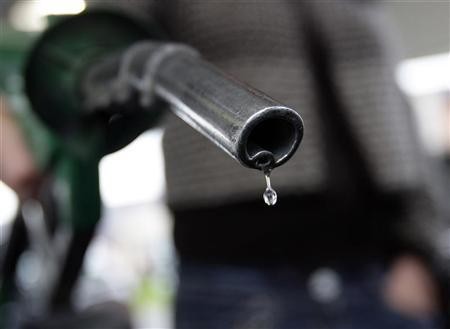 Second, if we don’t reduce our dependence on crude, we’re going to face terrible consequences. Wars. Famines. Poverty.
Rapier was in town Wednesday night to give the keynote address at an event titled Our Environmental Future, hosted by the University of Guelph and sponsored by the Council of Canadians and Transition Guelph.
A crowd of about 175 students, professors and concerned citizens came out to hear Rapier tell them “the easy oil is gone.”
In fairness, Rapier only alluded to the infernal scenario that could lie on the other side of the peak oil horizon.
Even as he explained why North Americans are certain to suffer a catastrophic decline in security and standard of living in the coming decades, he refrained from conjuring up any violent endgame that is the only logical upshot of his scenario.
In his khaki pants and tucked-in, buttoned-up golf shirt, he was a friendly, conservative doomsayer. He warmed his listeners up to the idea of their own downfall.
“It may be more difficult to scare a Canadian audience,” the American said genially at the outset of his speech, “because you guys are actually in a bit better shape.”
He was careful to dissociate himself from the “nutters” associated with peak oil, alarmists and false prophets who abuse the phrase to strike fear into the masses.
But his message was dire. “Without oil, here to Toronto is a long way,” he pointed out.
“The United States has to have oil to run that military machine,” he drawled, suggesting the country would continue to wage war to feed its addiction. “That’s the scarier option.”
He decried the “perpetual announcement of solutions to the energy crisis” as nothing but wishful thinking at best or profiteering by snake oil salesmen and feckless politicians too eager to throw money into “dead ends.” Ethanol, biomass, electric cars, wind and solar – none of these would solve the crisis.
No, the answer lay in reducing consumption, and therefore dependence, Rapier said.
“Eventually, we will hunker down and say that for our children, and our children’s children, there are certain things we have to do,” he said.
“We are going to have to change our expectations and use a lot less oil.”
In concrete terms, this means ending subsidies on fossil fuels – effectively making oil, oil-dependent activities such as driving, flying and growing food, and oil-based products such as plastics, fabrics, electronics and construction materials – in short, everything – way more expensive.
dhalfnight@guelphmercury.com www.google.co.uk